How we think about AI’s environmental footprint, and what responsible use looks like.
At Flourish Science, we build AI for mental health and well-being, and we believe the environmental impact of AI and its energy consumption deserve serious attention. As artificial intelligence becomes more widely adopted, we need to ask how responsibly and sustainably it is used. Our mission is to set an example of using AI in a thoughtful and purposeful way. That purposefulness extends to how we think about AI’s environmental impact.
Research shows that training large AI models requires substantial computing power, and the technology industry must continue improving through more efficient hardware, better model architectures, and greater use of renewable energy.
But once a model is trained, the marginal energy cost of using it is relatively modest. Estimates suggest that a 10-minute AI conversation consumes roughly as much electricity as a few minutes of streaming video online, and less than a comparable session of PC gaming. Similarly, research on data center water usage suggests that a brief AI interaction corresponds to a few hundred milliliters of water when indirect energy use is included.
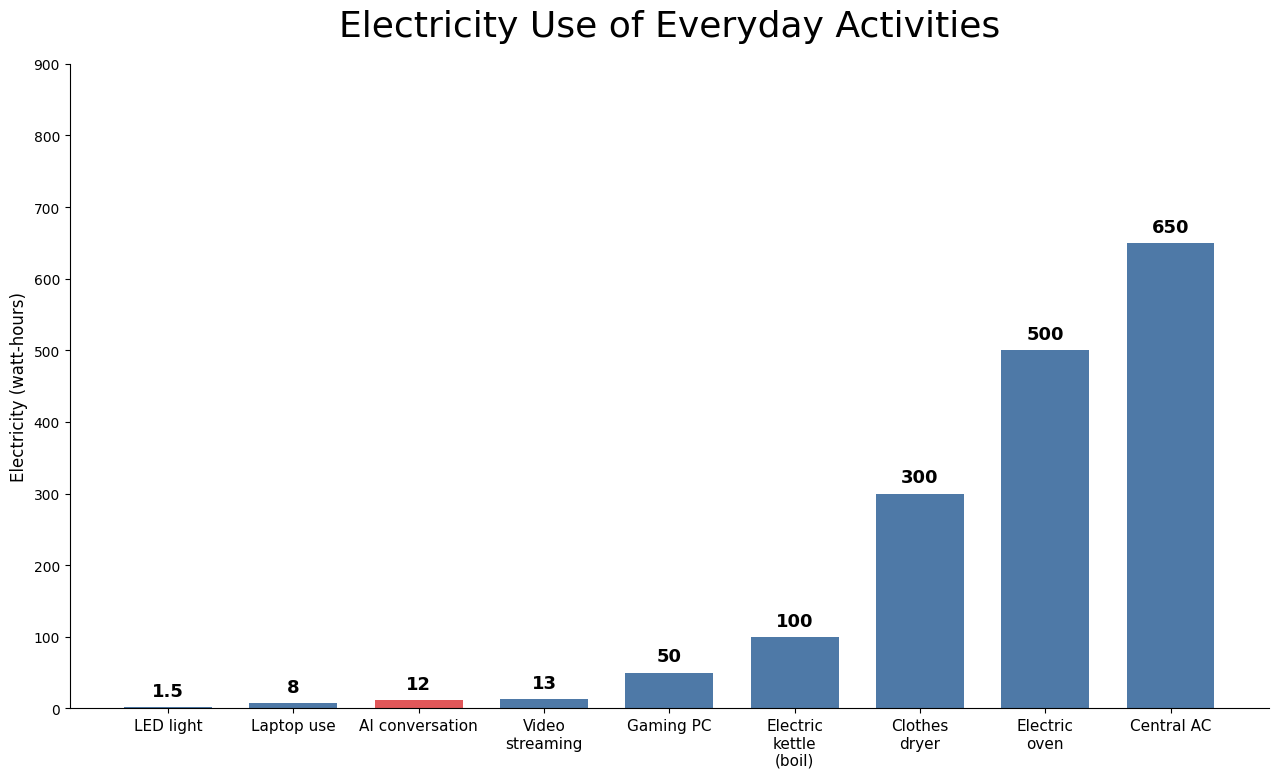
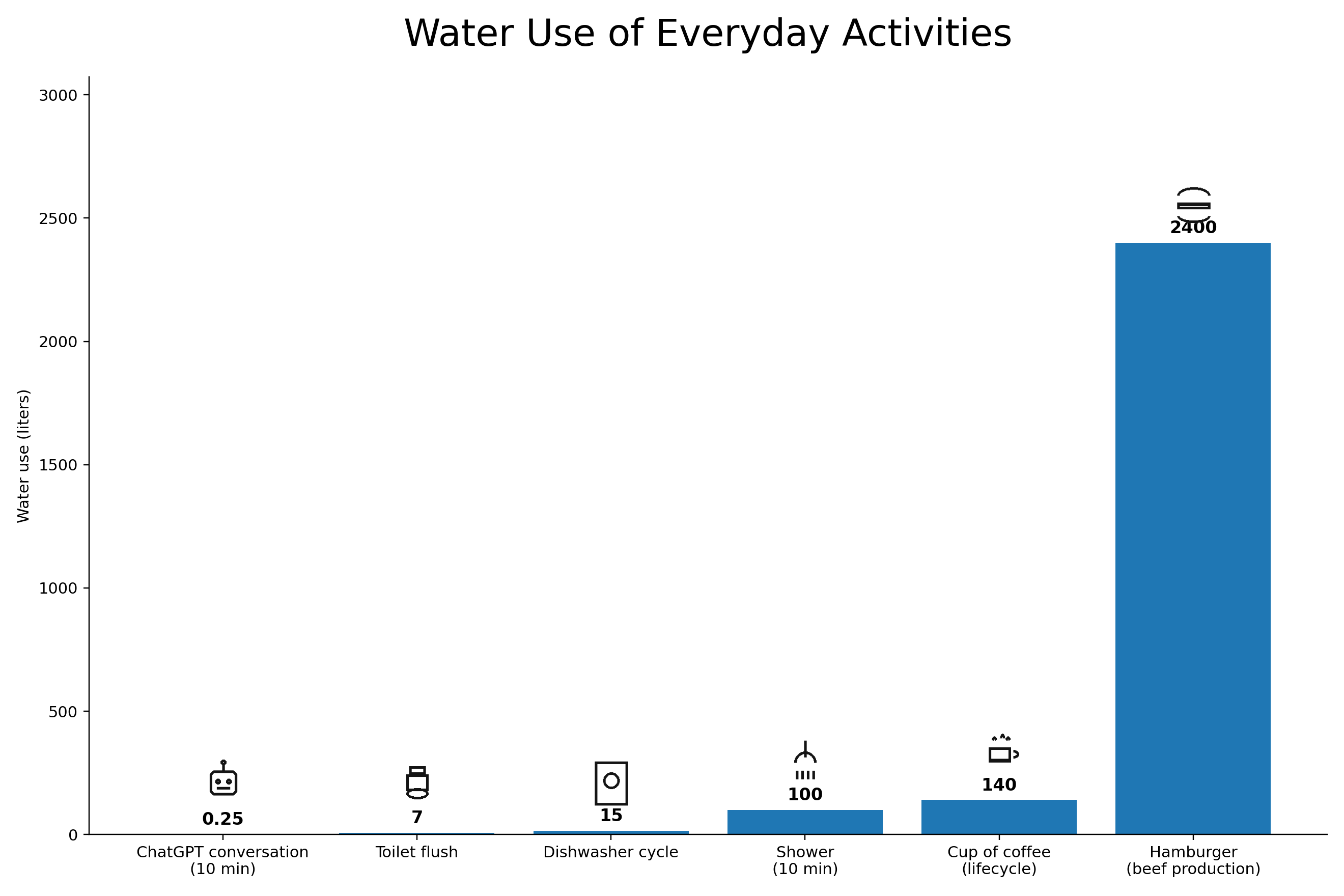
These comparisons help contextualize the environmental impact of everyday AI use. The more important question is therefore what the energy is used for—whether for passive consumption or for tools that help people improve their well-being and lives.
Many people already spend four to seven hours per day on digital platforms. How that time—and energy—is spent matters enormously.
When faced with anxiety, boredom, or loneliness, people often reach for social media and frequently end up feeling more anxious, frustrated, or disconnected afterward. Learning to regulate emotions constructively is a learnable skill, and it is one of the core things Flourish helps people build.
Flourish users report turning to it for effective emotion-regulation strategies in moments when they might otherwise mindlessly scroll social media. Many end up spending less time on their screens. Rather than encouraging passive consumption, Flourish helps people regulate negative emotions in the moment and take constructive steps toward emotional and social well-being.
This effect is intentional. We do not build AI for entertainment, emotional intimacy, or idle chit-chat. We build it as a purposeful tool to help people practice evidence-based well-being skills, address the mental health crisis, and intervene early—before distress escalates into crisis.
Healthcare contributes approximately 4–5% of global greenhouse gas emissions, driven largely by hospitals, emergency interventions, transportation, and intensive treatments. Mental health crises are among the most resource-intensive situations in this system.
Preventive mental health tools can interrupt that trajectory. When people learn to regulate stress, process difficult emotions, and build resilience earlier, they are less likely to require emergency room visits, inpatient care, or intensive outpatient treatment. Even modest improvements in prevention can produce meaningful downstream reductions in both healthcare utilization and emissions.
Flourish is the only AI mental health app supported by randomized controlled trials—the gold standard for evaluating intervention effectiveness—conducted by researchers at Harvard, Stanford, the University of Washington, the University of Manitoba, Chapman University, and others. These studies demonstrate measurable improvements in well-being and reductions in symptoms of depression and anxiety, showing that the energy invested in each use leads to meaningful positive impact.
Responsible AI, in our view, means deploying technology precisely where it generates genuine societal benefit: helping people navigate difficult moments, build lasting resilience, and live calmer, happier, more meaningful lives.

Generative AI is reshaping emotional support, but few tools are purpose-built on rigorous psychological science. Here is what we learned from bridging the gap.
Read more ➔
AI chatbots are everywhere, but most are not built for mental health. Here’s what you can do.
Read more ➔
An evidence-based, AI-powered approach to proactive student well-being, built for scale.
Read more ➔



Email hello@myflourish.ai to join us in this exciting movement, share a personal story, or simply send some good vibes. Your voice means a lot to us!